
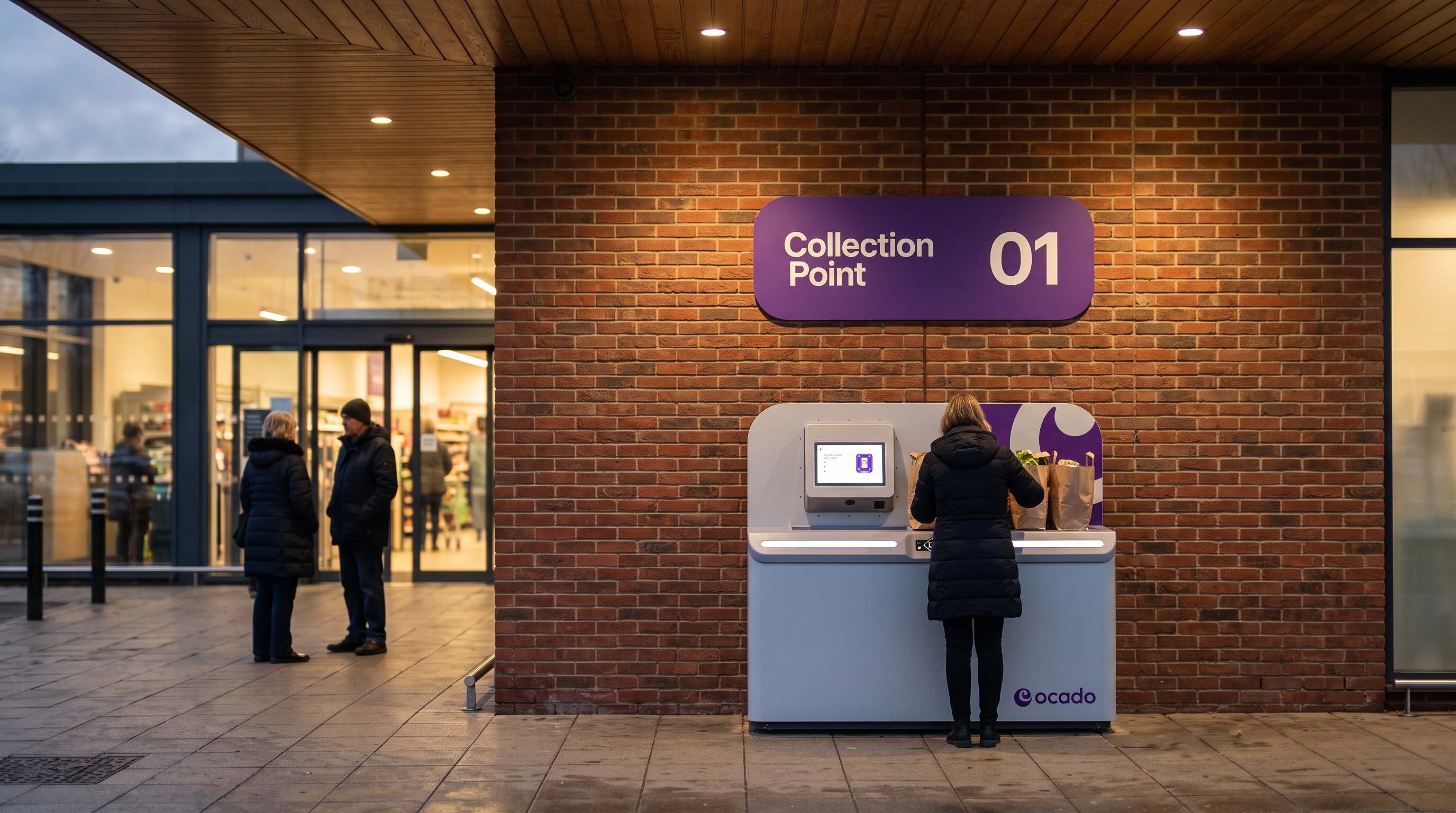
Client: Ocado Technology
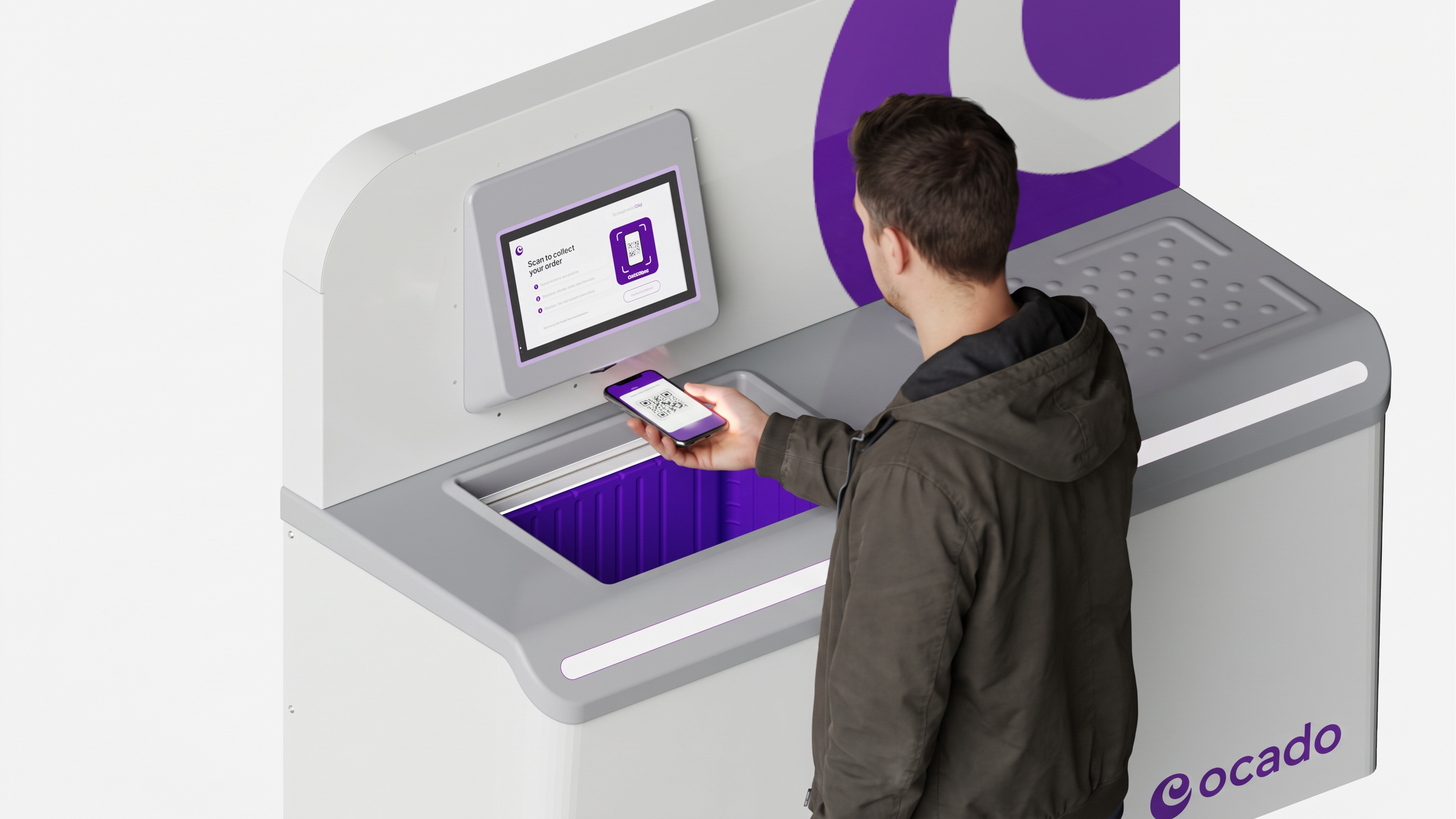
Ocado Technology aimed to unlock new revenue streams by transforming underutilised retail space into a high-efficiency automated fulfilment zone. We were tasked with designing the customer end of a rapid, lower-CapEx Customer Collection Point (CCP) to eliminate the traditional pain points of click-and-collect. The brief demanded a highly constrained physical footprint capable of withstanding extreme environmental conditions from -19°C to +39°C.
Maximising the value of existing retail space through high-efficiency automated fulfilment.
When users face poor signage, convoluted error resolution, or long queues, the commercial value of curbside pickup collapses. We recognised a hidden tension: while the backend relies on heavy-duty, strict environmental automation, the front-end interface must completely hide this mechanical complexity. The interaction point had to elicit absolute safety and trust during the transfer of groceries from the grid to the car, explicitly avoiding any aggressive or intimidating aesthetics.
Concealing heavy-duty automation behind a clean, intuitive, and reassuring user interface.
If the infrastructure looks like an anonymous experiment, category trust is lost.

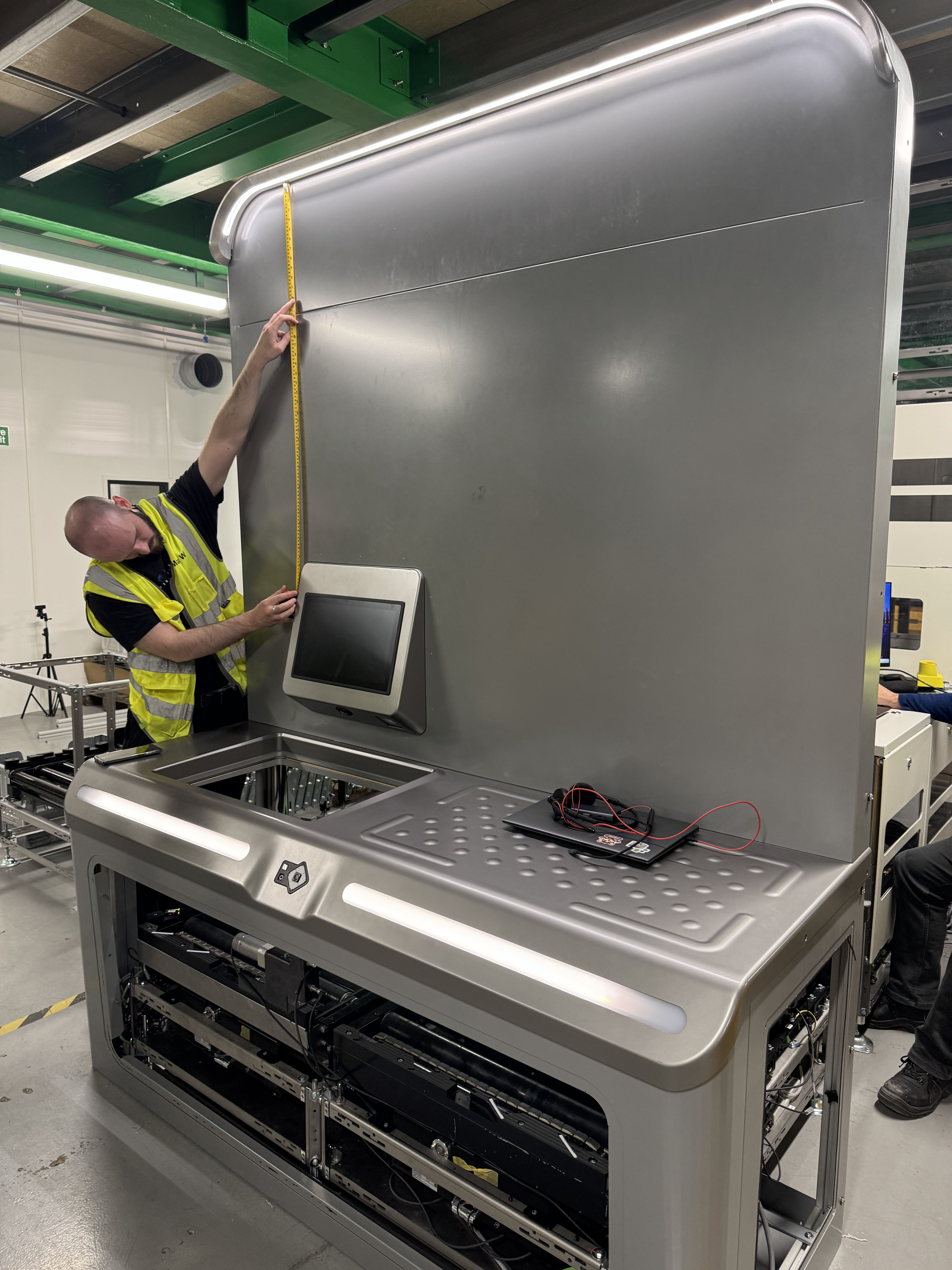
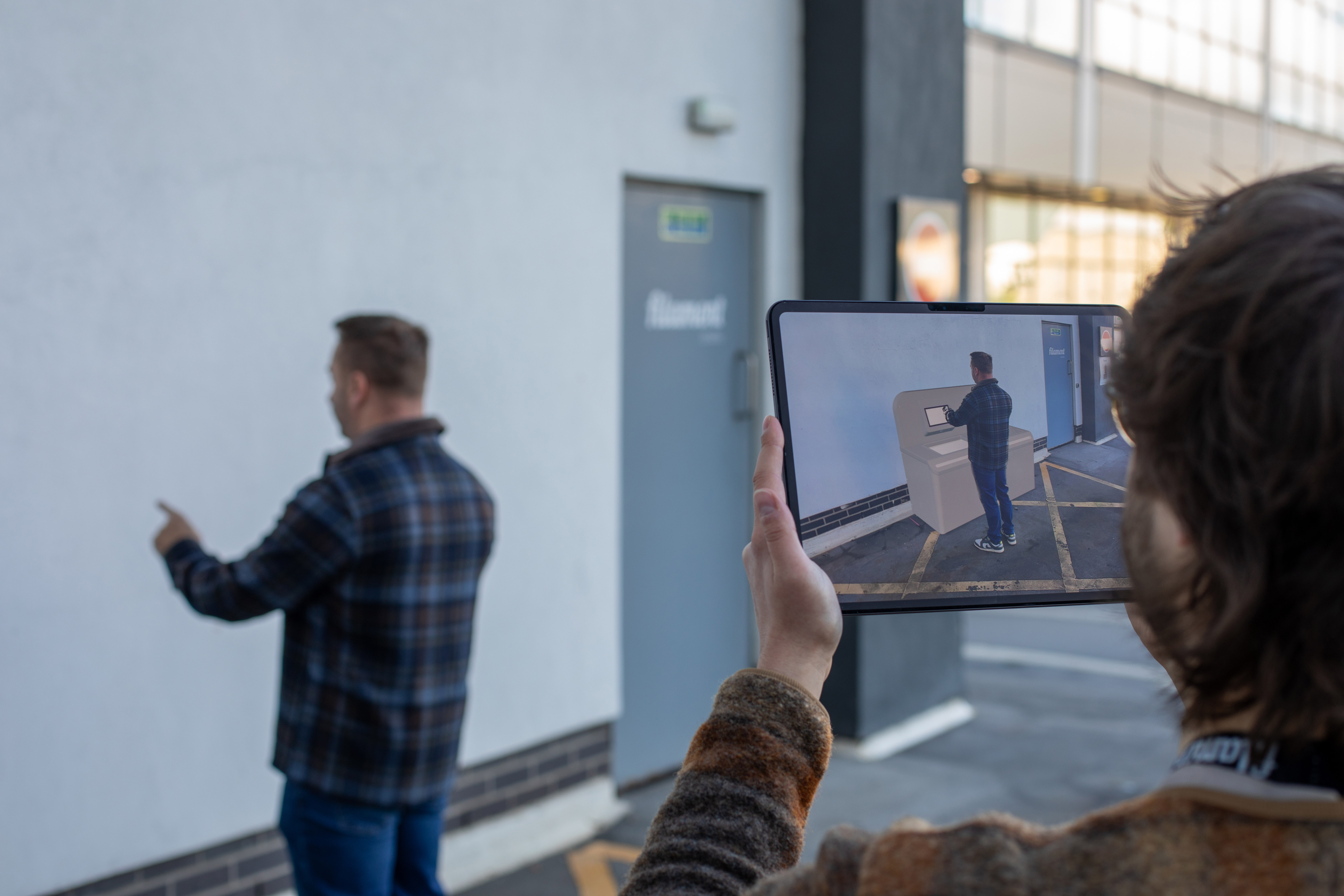
Moving quickly from high-level concepts into refined surface models and comprehensive public safety parameters, we engineered the chosen design into a pair of fully working prototypes. We integrated directly with the internal engineering leads at Ocado during the earliest conceptual phases, which meant we could rapidly balance UX design with complex tolerance stacks and deliver a fully functional proof of concept within an accelerated 6 month timeframe. Accelerating the transition from industrial design concept to physical validation.
Translating heavy-duty industrial constraints into a cohesive, scalable product family.
We mitigated the core physical and safety constraints by front-loading a strict engineering phase to define the hard envelope, functional requirements, and hazard scenarios before exploring any aesthetics. This created a tightly bounded, pre-approved structural architecture for us to innovate within, allowing the team to resolve ADA compliance, pinch points, and severe weather sealing at an unprecedented pace. Defining a strict physical architecture to enable rapid, risk-free aesthetic innovation.
Compressing a massive industrial hardware timeline into a rapid 6 month sprint.
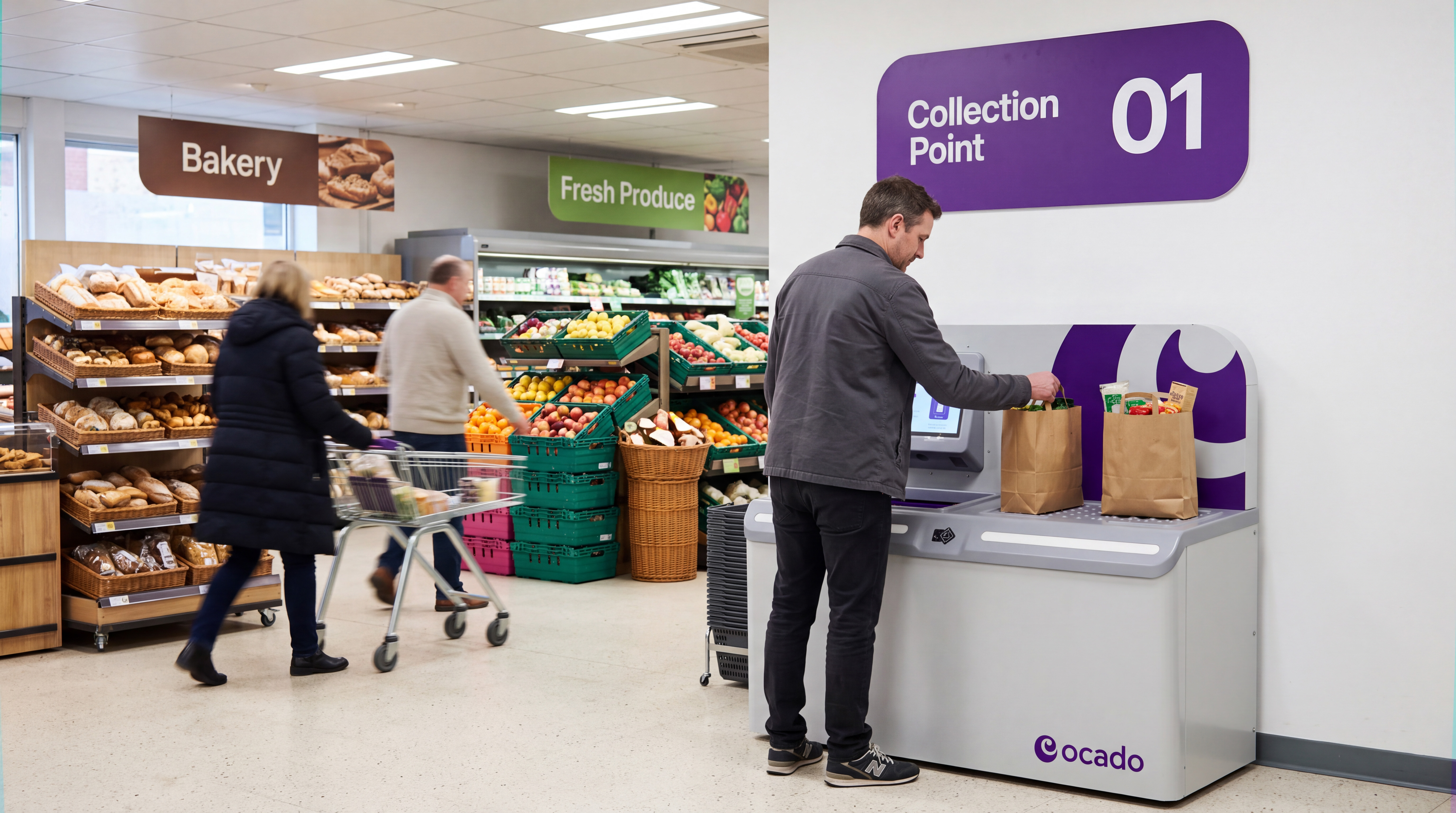
The CCP customer-end transitioned rapidly from a proof of concept to a Q4 2026 launch in the USA, scheduled to begin live customer fulfilment by 2027. Ocado now possesses a highly scalable, robust user touchpoint that physically transforms underutilised retail footprint into a highly profitable, automated logistics asset. From an ambitious logistical concept to a live, retail-ready automated fulfilment platform.
From an engineering trial to an authoritative product line ready for market.


