
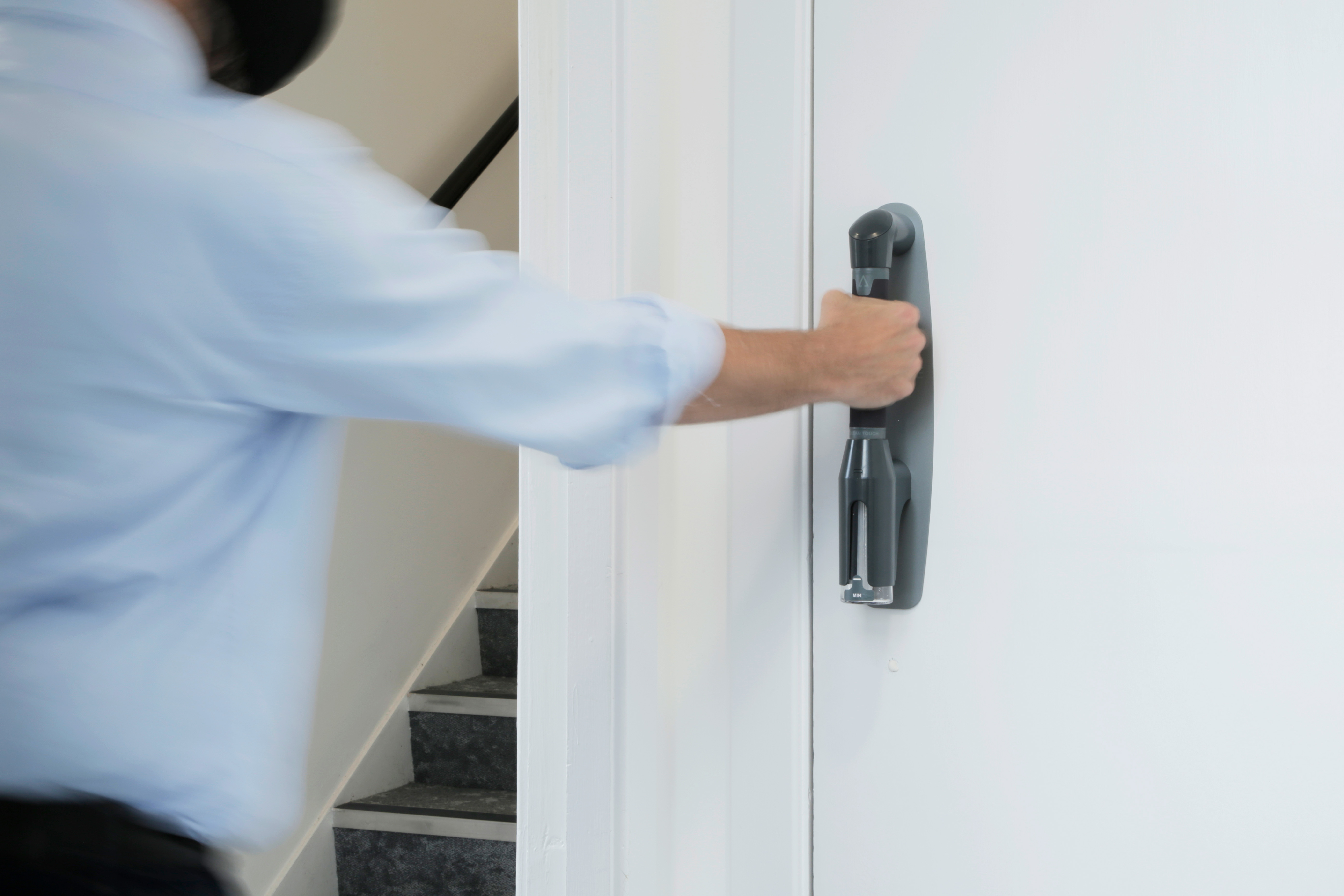
Client : Glana
.png)
They wash their hands. They follow the signs. Then they reach for a door handle that hundreds of others have already touched.
Glana wanted that small, familiar moment to feel different. They came to Filament with a self-sanitising handle concept and a clear intention. The last thing you touch in a space should feel like the safest, not the riskiest.
Not a reminder of shared risk.
But a quiet signal that care continues at the door.
What it often lacks is trust. Posters and hand gel do not change the fact that people will keep opening doors exactly as they always have. Any solution depending on perfect habits or constant staff attention was likely to fade as routines slipped.
Three things had to hold. The handle had to look after itself between touches, tolerate years of hard use without sagging or leaking, and fit existing maintenance patterns without demanding a whole new system.
If hygiene relies on perfect behaviour, it will fail.
Build protection into the object and it becomes routine.
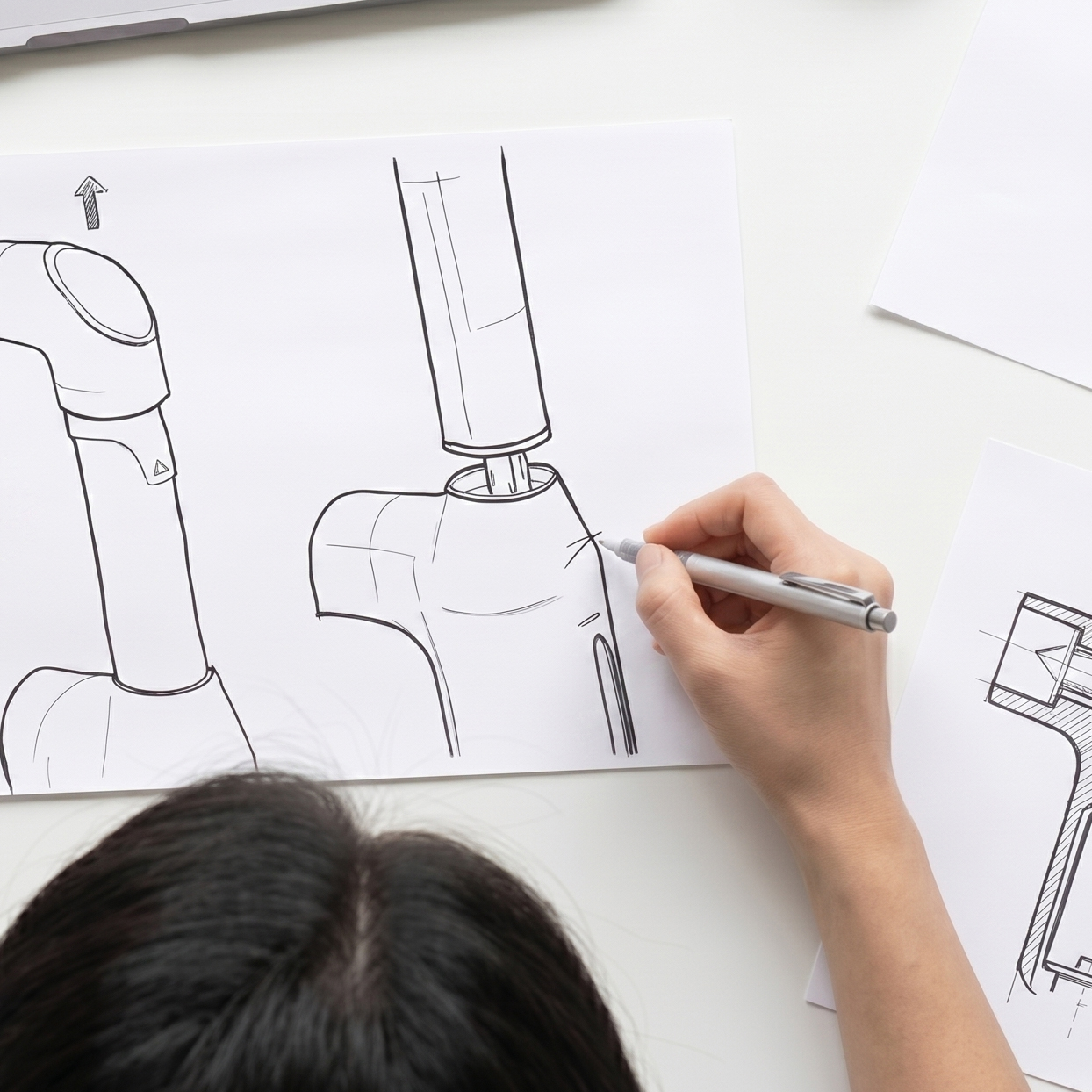

always-on protection, straightforward maintenance and resistance to tampering. A refillable reservoir feeds a self-wicking core that keeps antibacterial fluid at the surface continuously. Normal contact helps sanitise both handle and hand.
Lockable housings and modular parts let facilities teams swap components and refill fluid quickly, without removing door furniture or interrupting service. We spent time with infection control and estates staff so the product would be accepted on real doors, not just admired in presentations.
Designed with the estates team in mind.
So infection control is supported by habit, not hope.
Every touch draws fresh fluid to the surface. Between touches, the handle continues to protect itself. Over time, the point people once tried not to touch becomes a small moment of reassurance instead of concern.

A visible sign that hygiene is taken seriously.
The point people once tried not to think about becomes a small moment of reassurance every time the door opens.


